What Actually Determines Your Mortgage Rate?

Tempe · Community Photo
People talk about mortgage rates the way they talk about the weather — as one number that exists out there and applies to everyone. "Rates went up." "Rates are good right now."
But two buyers can walk into the same lender on the same day and be offered noticeably different rates. Understanding why puts you in a much better position, because several of the factors are things you can influence.
There is no single rate
The rates you see quoted in headlines are averages. Your rate is calculated for you, based on your situation and your loan.
That's actually good news. It means you're not simply at the mercy of the market. Some of the inputs are yours to improve.
What you control
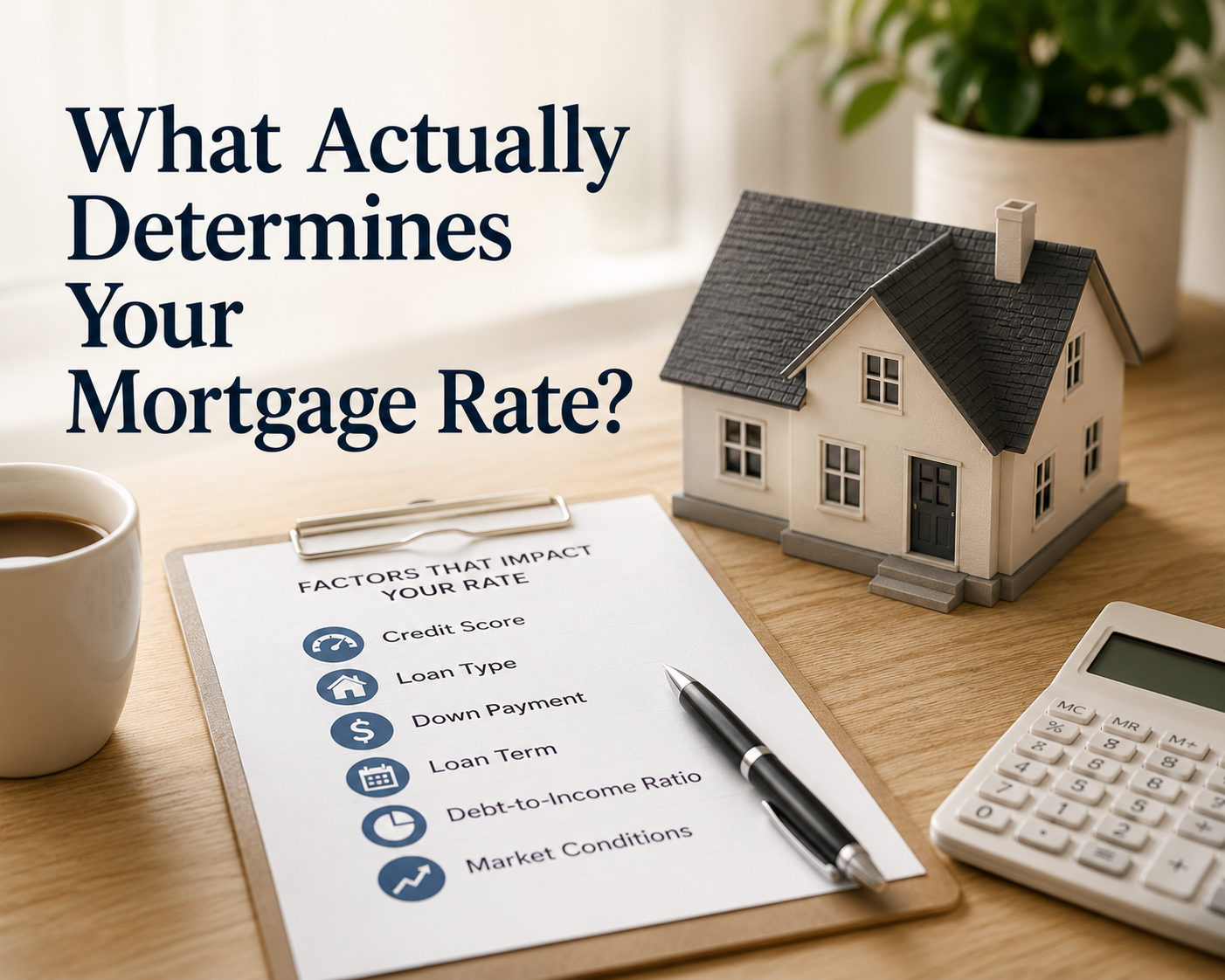
Your credit. This is usually the biggest personal factor. Stronger credit generally means better pricing. Even moving up a tier can change what you're offered, which is why working on credit before applying pays off.
Your down payment. More money down usually means better terms, since the lender's risk is lower. Certain thresholds can matter, and a loan officer can tell you where they fall for your program.
Your debt-to-income ratio. This compares your monthly obligations to your income. Paying down debt before applying can help here.
The loan term. Shorter terms typically carry lower rates than longer ones, though the monthly payment is higher. It's a real tradeoff, not a free win.
The loan type. Different programs price differently. Adjustable-rate loans often start lower than fixed, in exchange for future uncertainty.
Property type and occupancy. A primary residence usually prices better than a second home or an investment property.
Points. You can sometimes pay upfront to lower your rate. Whether that's worthwhile depends on how long you'll keep the loan.
What you don't control
Broader economic conditions, bond markets, and Federal Reserve policy all influence the general rate environment. These move for reasons that have nothing to do with you.
It's worth understanding one common misconception: when you hear that the Fed changed rates, that doesn't directly set mortgage rates. Mortgage rates are more closely tied to the bond market, and they sometimes move in ways that surprise people relative to Fed announcements.
Comparing offers correctly
Here's where people lose money without realizing it: comparing lenders on rate alone.
A lower rate paired with higher fees may cost more overall than a slightly higher rate with lower fees. The number that helps you compare is the APR, which folds certain costs into a single figure.
Better still, get written Loan Estimates. This is a standardized form, which means you can lay two of them side by side and compare the same lines. The Consumer Financial Protection Bureau explains how to read one and what to look for.
And when you shop, do it within a focused window. Credit scoring models generally treat multiple mortgage inquiries in a short period as a single event, so shopping around doesn't have to damage your credit.
Locking your rate
Once you have a rate you're comfortable with, you can typically lock it for a period of time, protecting you if rates rise before closing.
Ask how long the lock lasts, what happens if your closing is delayed, and whether an extension costs anything. These details are easy to skip and occasionally expensive.
Don't try to outguess the market
A lot of buyers wait, hoping to catch a better moment. Sometimes it works. Often it doesn't, and meanwhile home prices move too.
Nobody reliably predicts short-term rate movement. A more practical approach is to focus on whether buying makes sense for your life and your budget, and to make yourself as strong a borrower as you can. Those are the parts you actually control.
Randy Bongard with Price Mortgage works with buyers and homeowners throughout the Greater Phoenix area and can walk through what specifically affects your situation.
Ask what would help you
The most useful question you can ask a loan officer isn't "what's your rate?" It's "what would improve my rate?"
That answer is specific to you, actionable, and often surprisingly encouraging. It's the difference between hoping for a good market and building a good file.
Get in touch Randy Bongard — Price Mortgage Website: https://pricemortgage.com/about/randy-bongard/ Email: rbongard@pricemortgage.com
Helpful links
- CFPB guide to comparing loan offers: https://www.consumerfinance.gov/owning-a-home/
- Randy Bongard, Price Mortgage: https://pricemortgage.com/about/randy-bongard/